Last updated November 21, 2026
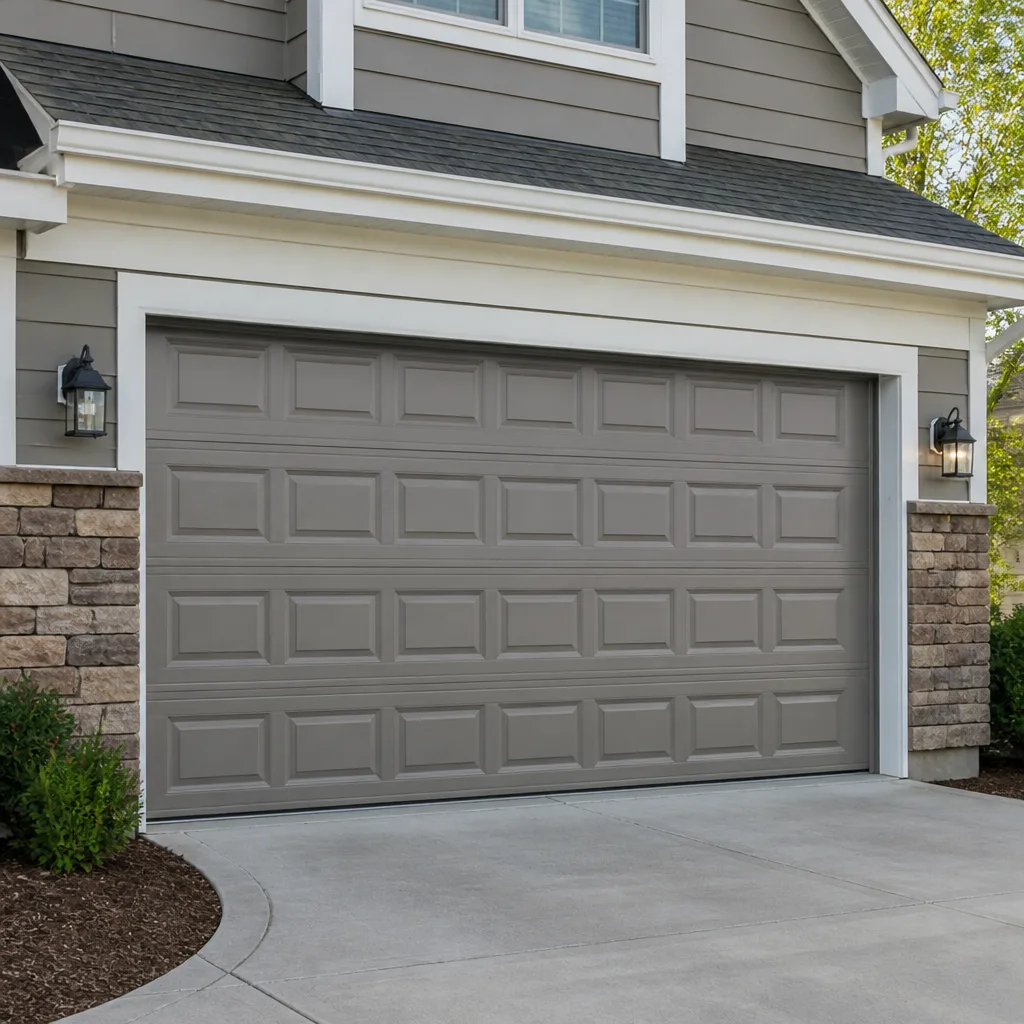 Raised-panel steel
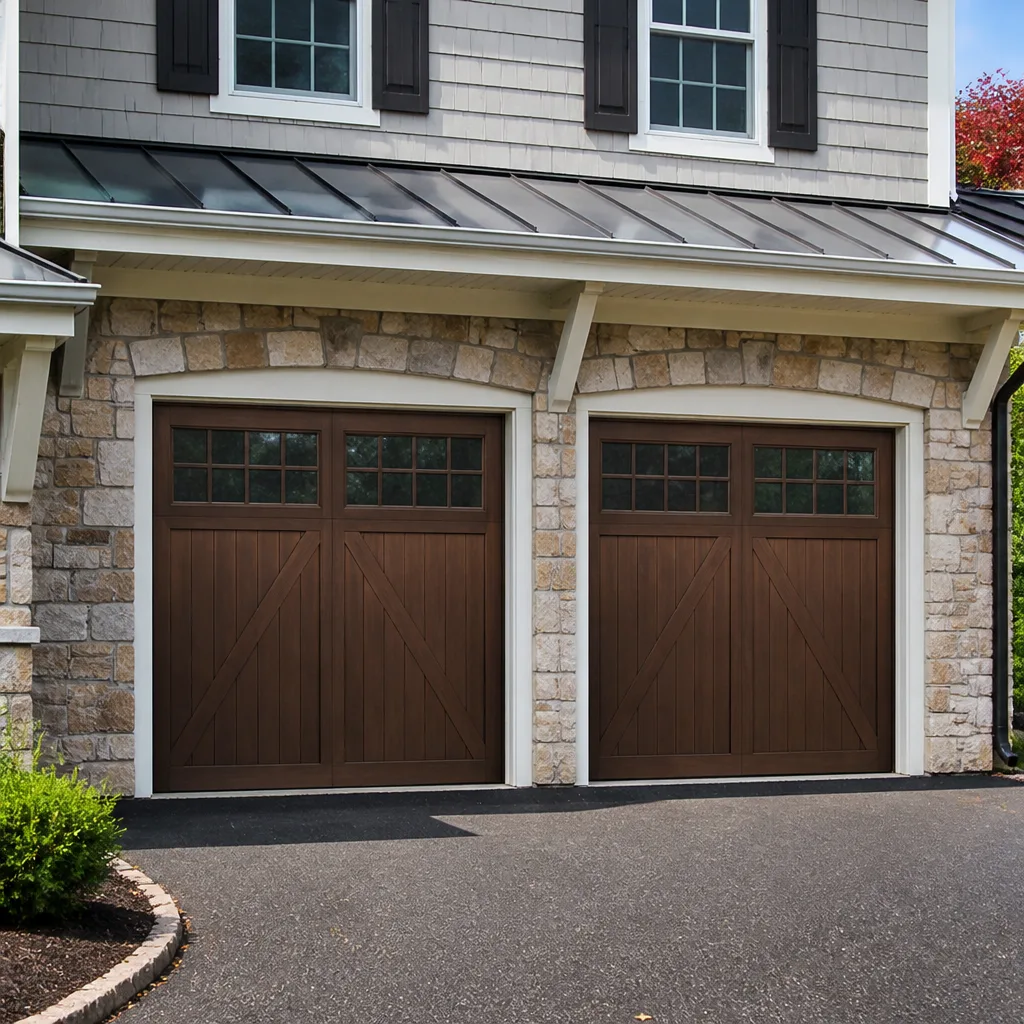 Carriage house
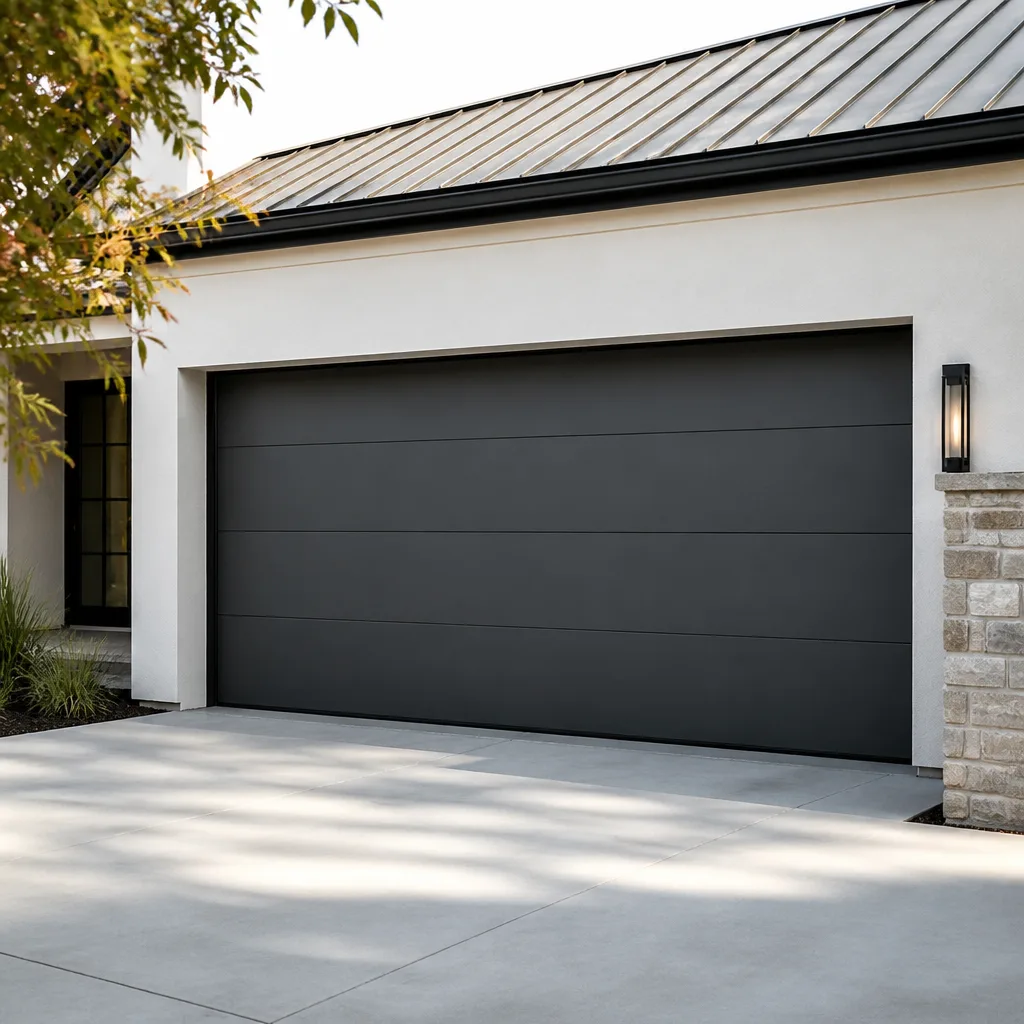 Modern flush
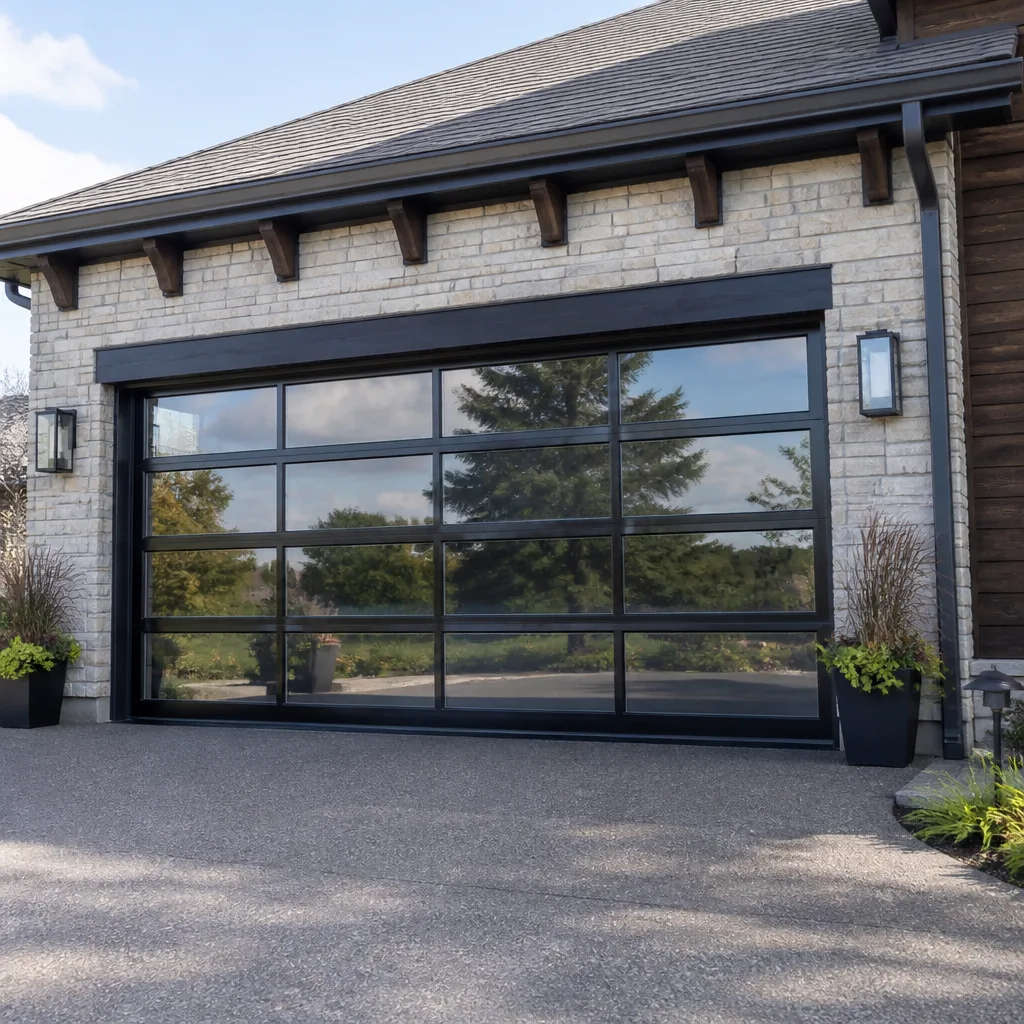 Full-view glass
 LiftMaster openers
 Chamberlain openers
Full 25-point door and opener safety check with every visit - springs, cables, rollers, tracks, and your LiftMaster or Chamberlain opener included
You get a price before we start. It does not change when the pro arrives.
Get your free estimateGarage Door Warning Signs: A Joliet Homeowner’s Reference Guide
A garage door that shudders a little on the way up isn’t a personality quirk. It’s a roller that’s failing, and that failing roller is putting uneven load on the spring every time you open the door. Springs don’t break because they’re tired; they break because something upstream has been punishing them for months. The trouble is that a garage door gives you plenty of warnings and almost no labels. A grind, a pop, a hesitation in January, a dent you stopped noticing. Most Joliet homeowners can hear that something’s off but can’t tell which sounds mean “keep going” and which mean “stop before this gets expensive.” This guide reads your door the way a technician does, sorting cosmetic quirks from the mechanical problems that are days away from failure.
Quick Answer
Garage door warning signs that matter most are grinding or popping during travel, jerky or uneven movement, a door that hangs crooked, a spring that’s visibly broken or stretched, and any hesitation in cold weather. Squealing, single dents, and minor rattles are usually low priority. The signs that call for immediate stop-use are a broken spring, a snapped cable, a door hanging off its track, or any door that drops fast under its own weight.
Styles & brands we work with
- Raised-panel steel
- Carriage house
- Modern flush
- Full-view glass
- LiftMaster openers
- Chamberlain openers
Table of Contents
- The Sound Index: What Each Noise Is Telling You
- The 60-Second Asymmetry Test
- Why Your Door Hesitates in Cold Weather
- A Cosmetic Dent Versus Real Panel Damage
- Spring and Cable Signals You Should Never Test Yourself
- Opener Warning Signs, Including Smart Systems
- Response Protocol: Stop-Use, Wait-a-Week, or Low-Priority
- How Joliet Homes and Weather Shape the Failure Pattern
The Sound Index: What Each Noise Is Telling You
Your ears are the cheapest diagnostic tool you own. A garage door is a mechanical assembly of springs, cables, rollers, hinges, bearings and a track, and each component fails with a fairly consistent signature. When you know which signature goes with which part, a sound stops being noise and starts being information. Here’s the index we walk through with homeowners on the phone before we ever schedule a visit, because it usually tells us what to expect before a technician sets foot in the driveway.
Grinding. The sound of metal dragging on metal is nearly always a bearing. Rollers ride on shafts, and when the bearing inside a roller seizes, the roller stops rolling and starts skidding. Grinding that comes and goes with each rotation of the door is a roller. Grinding that stays constant points toward a binding track or hinge. Left alone, a seized roller drags the track out of alignment and loads the spring.
Popping or snapping. A single loud pop when the door starts up often means a torsion spring has just broken. A series of pops during travel points to the cables jumping in the drums or a hinge pulling loose from the panel. Any single, sudden bang followed by the door not lifting is a stop-now situation. A pop you’ve heard coming for weeks is a “call today” situation. Neither is a “wait until it’s convenient” situation.
Squealing or screeching. High-pitched noise is worse than a low grind in one specific way: it usually travels. A squealing roller may have dry bearings, and once the heat and friction build, that bearing starts trying to weld itself to the shaft. Squealing that’s local to one roller is a simple replacement. Squealing across the whole door means the rollers and possibly the hinges are running dry and worn.
Banging or slamming. If the door drops the last few inches with a bang instead of slowing to a stop, the opener’s limit switch or travel setting has drifted, or the springs have lost their counterbalance. This one matters. A door that slams repeatedly hammers the panels and the opener gear, and it’s the most common cause of the “the opener died suddenly” complaint we hear around Joliet.
A rattle that never goes away. Loose bolts and worn hinges rattle, and while rattle alone is minor, it’s often the first sound a failing door makes before the grinding starts. Tightening and lubricating a hinge set is cheap. Discovering it’s actually a loose hinge pulling the panel apart is not.
The Garage Door Repair Joliet Pros team works on the brand you already have, so when we identify a failing LiftMaster opener or a worn Clopay roller assembly, we’re not guessing at a manual we’ve never read.
The 60-Second Asymmetry Test
You can diagnose most of what matters visually without touching a single moving part. This is the test we recommend to any Joliet homeowner who wants a fast read on whether their door is functioning evenly. It takes about a minute. You don’t need a ladder, a flashlight, or any tools. Do this with the door in the fully closed position, standing inside the garage.
- Stand center in front of the door and look at the bottom edge. Is it parallel to the floor? A bottom edge that’s higher on one side than the other points to an uneven cable or one spring carrying more load than the other.
- Follow the vertical gap along each side of the door. The gap between the door and the jamb should look identical on both sides. A gap that widens toward the bottom or top is a sign of a twisted or sagging track.
- Look at the hinge point on the left and compare it to the right. Hinges should be at the same height, with the same amount of space to the panel edge. If one side looks tighter or looser, the panels aren’t sitting square.
- Move to the track and look down the vertical rail. Get close and sight along the rail like a rifle barrel. It should be perfectly straight. A slight bow is a track out of alignment, and it’s often caused by something as ordinary as a car backing into the edge.
- Look at the cables on each side. The cable should be taut and lying evenly in its drum. A cable with visible kinks, fraying, or slack on one side and tension on the other is an immediate stop-use situation. Cables under tension can cause serious injury, and this is not something to investigate further on your own.
- Watch the door move up and stop it halfway. If you can safely stop the door in the middle of travel, look at it from the side. Each panel should be level, not tilted. A tilted panel means a broken spring or a failed hinge, and you should not operate the door again until a trained technician has seen it.
If the door fails on more than one of these checks, don’t cycle it “just to see.” A crooked door in motion puts uneven load on the springs, and the springs are the part nobody should be pushing their luck against. That’s the kind of situation where we take emergency calls seriously. If the door fails on any of these tests, call us and we’ll book a technician for the earliest available slot. For routine repair scheduling, a same-day visit is often possible.
Why Your Door Hesitates in Cold Weather
If your door only misbehaves in winter, it’s not weather-sensitive, it’s mechanically stressed, and the cold is simply exposing it. That’s a helpful distinction. A healthy garage door operates the same in January and in July. A door that works “fine most of the time” but drags, stalls, or lags in the cold is telling you something specific. Joliet winters make that visible in a way that year-round mild climates don’t, which is actually a gift if you’re paying attention.
Here’s what cold does to a garage door assembly mechanically. Metal contracts, which means the gap clearances between rollers, hinges, and tracks tighten up. Grease and lubricant thicken and lose their film strength. Rubber weather seals stiffen. Springs are steel, and steel’s elasticity budget changes with temperature. A spring that’s within a few hundred cycles of its end can still manage a warm day and fail on a cold morning. The cold doesn’t break the spring; the cold reveals that the spring was already near the end of its life.
The same logic applies to the opener. A cold-weather hesitation in a LiftMaster or Chamberlain opener is almost always one of three things: the motor is straining harder than usual against a stiff door, a gear or bearing is dry, or the electronic travel limits are getting jittery. Modern openers aren’t actually designed to resist cold, they’re designed to resist load, and a stiff door in January loads the opener more than the same door in June. The hesitation is your opener telling you it’s working harder than it wants to.
In our experience around Joliet, the sequence goes like this: a homeowner notices one or two cold-morning hesitations in November, dismisses it as “weather,” hears it a few more times in December, and then the door refuses to lift on the coldest morning of the year. That last failure isn’t random. It’s the end of a chain that started with tight rollers and a spring nearing its limit. If you’ve noticed a cold-weather lag on your door, it’s worth a diagnostic call now rather than an emergency call later. Opener hesitation is where we do most of our garage door opener repair work in the colder months.
A Cosmetic Dent Versus Real Panel Damage
A dent in a garage door panel is not automatically a problem, but the line between cosmetic and structural is narrower than most homeowners think. Here’s the test. A cosmetic dent is a localized depression with no crack lines radiating from it, no separation at the panel’s seams, and no change in how the door sits or closes. Cosmetic dents don’t affect the seal, the balance, or the panel’s rigidity, and you can live with them indefinitely. They’re ugly, but they’re stable.
A structurally significant dent is different. Look for these markers:
- Creases or crack lines radiating outward from the dent. A crease means the panel has been bent past its elastic limit, and that section of the panel is now permanently weakened.
- Separation at the panel seams. If the dent has pushed material into the seam between two panels or has spread the hinges, the door’s structural integrity is compromised.
- Any change in how the door closes along the bottom seal. A dent that affects the bottom panel’s straight edge lets air and water in. In a Joliet winter, that’s not a cosmetic problem, that’s a cold floor, a wet floor, and eventually a rusted bottom edge.
- Popped or bulged rivets around the dent. This is the strongest sign that the panel is holding load differently than it was designed to.
- A dent on the bottom section near the lift points. The bottom panel carries the most load from the lift hardware. Dents near hinges or lift brackets are never purely cosmetic.
Panels on most Clopay and Amarr doors can be replaced individually, which is often the cheaper fix when one section is compromised. That’s part of what we mean by “from opener to panels, one call covers it.” When a damaged panel comes back into stock or a replacement is the right call, we handle that through garage door installation without sending you to a second contractor.
Spring and Cable Signals You Should Never Test Yourself
Torsion springs and the cables attached to them are the two parts of a garage door that genuinely warrant a stop signal. A torsion spring under load stores enough energy to seriously injure anyone who accidentally releases it, and cables under tension can snap back with enough force to cause permanent damage. This is not a safety warning we’re using to sell service. It’s the reason spring repair is a specialty trade within the garage door trade, and plenty of general handymen won’t touch it. We do, as a standard service, because it’s the repair that matters most when something fails.
You can inspect these parts visually, from a safe distance, and you should. Here’s what to look for without ever touching the springs, cables, drums, or bottom bracket:
- A visible gap in the torsion spring. A torsion spring that has failed will usually have a clean gap somewhere along its length, often a quarter inch or more. The gap is unmistakable once you know where to look, and the door has lost its counterbalance the moment it appears.
- A stretched spring with uneven coil spacing. Spring coils should be evenly spaced. Coils that are stretched open on one side or bunched on the other mean the spring is losing tension.
- A slack or hanging cable. One cable taut and the other slack is a stop-use condition. If the door is closed and you see a cable sagging under the drum, do not operate the door.
- Frayed cable strands. Fraying is the precursor to a snap. A cable that looks like a worn rope is done, and it needs replacing now.
- A rusty spring. Rust doesn’t cause a spring failure directly, but it’s a good proxy for age and wear, and a rusty spring near the end of its cycle deserves a technician’s eyes.
If you find any of these, don’t cycle the door to check. Pull the manual release to disengage the opener if it’s safe to do so, leave the door down, and call for service. Emergency garage door service is a core part of what we do, not an add-on. If you see a broken spring or a snapped cable, call (833) 382-8894 and we’ll get a trained technician out to handle it. Our technicians have up to 12 years of experience, and spring work is exactly where that experience matters.
Opener Warning Signs, Including Smart Systems
The opener is the part of the system most likely to have a diagnosable failure early, and the warning signs are subtle. If you’re standing under your opener and it makes a low whine or grunt before the door starts moving, it’s working harder than it should. If the opener runs briefly and stops without moving the door, it’s most likely hitting a force limit that’s been triggered by a stiff door. If the safety reverse fails to engage when an object is in the door’s path, treat that as urgent. And if the light on the opener flickers or the remote only works from a short distance, the logic board or antenna is a likely culprit. Here’s a fast list of things to check before you call:
- Check that the door is balanced first. Disengage the opener with the manual release and lift the door by hand. It should lift smoothly and hold in place about halfway up. If it drops or won’t hold, the opener isn’t the problem, the springs or cables are.
- Test the wall switch independently of the remote. A door that responds to the wall switch but not the remote has a remote or receiver problem, not a motor problem.
- Test the safety sensors. Confirm that both sensors have a lit LED and that the path between them is clear. A dusty sensor lens on a Joliet winter morning is the single most common cause of a door that “won’t close.”
- Note the behavior of the door when it fails. Door moves up but not down is usually a sensor. Door doesn’t move at all is usually a logic board, motor, or remote issue. Door moves unevenly is a mechanical problem, not an opener problem.
- For a smart opener, check the app’s event log. LiftMaster and Chamberlain app logs list every open, every close, and every force-limit trip. If the door reports several force-limit trips in a row, it’s telling you it’s fighting the door, and the opener isn’t the part that needs the repair.
Craftsman and Genie openers have their own quirks, and there’s no substitute for knowing the specific system in your garage. Our work on LiftMaster and Chamberlain covers the connected, app-controlled systems that many Joliet homes already have, and we don’t need to replace a working opener just to diagnose it.
Response Protocol: Stop-Use, Wait-a-Week, or Low-Priority
Not every warning sign is equal, and treating them as if they are wastes your time and money. Here’s the triage we’d give a Joliet homeowner over the phone. This is the same sorting we do when we’re deciding whether to send a technician out the same day or schedule a visit.
Stop using the door immediately. Call for emergency service.
- Any visible gap in a torsion spring, or a spring that’s clearly snapped.
- A frayed, kinked, or slack cable on one side of the door.
- A door hanging off its track, or a panel that’s separated from the hinge hardware.
- A door that drops fast under its own weight when released.
- An opener that continues to lift a door that’s obviously off balance.
- Any object or person caught under a moving door.
Call within the week and schedule a repair.
- Grinding or squealing during travel that’s getting louder.
- A door that slams the last few inches to the floor.
- A door that hesitates only in cold weather.
- An opener that trips its force limit more than once.
- Any door that starts moving unevenly on a weekly basis.
Low priority. Handle it when it’s convenient.
- A single cosmetic dent with no creasing or seam separation.
- A rattle that disappears after tightening or lubricating.
- A slow or intermittent remote that works fine from the driveway.
- A garage door light bulb that’s dimming.
- Weathered paint or cosmetic panel wear.
If you’re unsure which bucket your door falls into, describe the sound and the door’s behavior and we’ll tell you straight. We’d rather sort by phone than send a technician for a cosmetic dent. And when it’s an emergency, we’d rather hear from you today than tomorrow.
How Joliet Homes and Weather Shape the Failure Pattern
A garage door in Joliet lives through a wider temperature swing than a door in most of the country, and that swing drives what fails and when. Our local pattern: springs get their workout in the spring and fall transitions, when the door is cycling the most as temperatures move around. Rollers and hinges take their hit from grit and grit-mixed lubricant that stiffens in January. Bottom seals fail a little faster here because bottom panels see road salt unless the seal is keeping it out. The full swing of a Joliet winter from a cold, dry snap to a wet, freezing thaw is the kind of cycle that finds weaknesses in seals and panels that wouldn’t fail in a stable climate.
The other Joliet-specific factor is housing. This is a city of detached garages attached to older housing stock, mixed with newer subdivisions where doors are almost always the two-car, panel-style configuration that attaches directly to the house. In both cases, the garage door is a primary entry point, not an afterthought. It’s used multiple times a day, sometimes in rapid cycles, especially in homes where the garage is the family’s everyday door. That use pattern puts more cycles on the springs and the opener than households that park in the driveway and use the front door. It’s why we spend a lot of our time on worn rollers, hinge failures, and openers that are being asked to do more than they should.
We work all over the area, from the neighborhoods close to downtown Joliet to the newer construction out toward Plainfield. Doors near the plain feel the wind loading in a way that inland doors don’t, and doors on the older sections see more weight of use and older hardware. The point isn’t to lump every Joliet door together. It’s to say that whether your door is a Wayne Dalton on a newer build or an older Craftsman on the east side, the warning signs work the same way. Read the sound, run the asymmetry test, watch the cold-weather behavior, and you’ll know more about your door than most people ever do.
Common Mistakes to Avoid
- Treating a “little shudder” as normal. A shudder during travel is a failing roller or a loose hinge, and it’s loading the spring unevenly on every cycle. The spring failure that comes later is more expensive than the roller replacement you skipped.
- Testing a broken door on the opener instead of by hand. If the door is off balance, the opener will fight the door and can damage itself. Before you assume the opener is the problem, disengage it and check whether the door holds its own weight.
- Ignoring cold-weather hesitation. A door that only lags in winter is telling you it’s already near the end of its elastic margin. It’s the cheapest problem to fix in November and the most expensive one to fix in February.
- Touching a torsion spring “just to see if it’s loose.” Springs are under load and can cause serious injury. Visual check only. Even experienced generalists leave this to a garage door specialist, and that’s the right call.
- Fixing a cosmetic dent with structural damage behind it. Creases, popped rivets, and seam separation mean the panel has failed. If the bottom seal no longer sits flush, you’ll get water and cold air in through a Joliet winter and corrosion in through the summer.
- Replacing an opener without checking the door first. A door that won’t lift on a new opener usually wouldn’t lift on the old one either. Diagnose the door, then the opener.
- Letting a security warning sign stretch into a safety problem. A door that won’t close or reverse on command is a security issue and a safety issue. That’s not the kind of warning to sit on.
See the difference
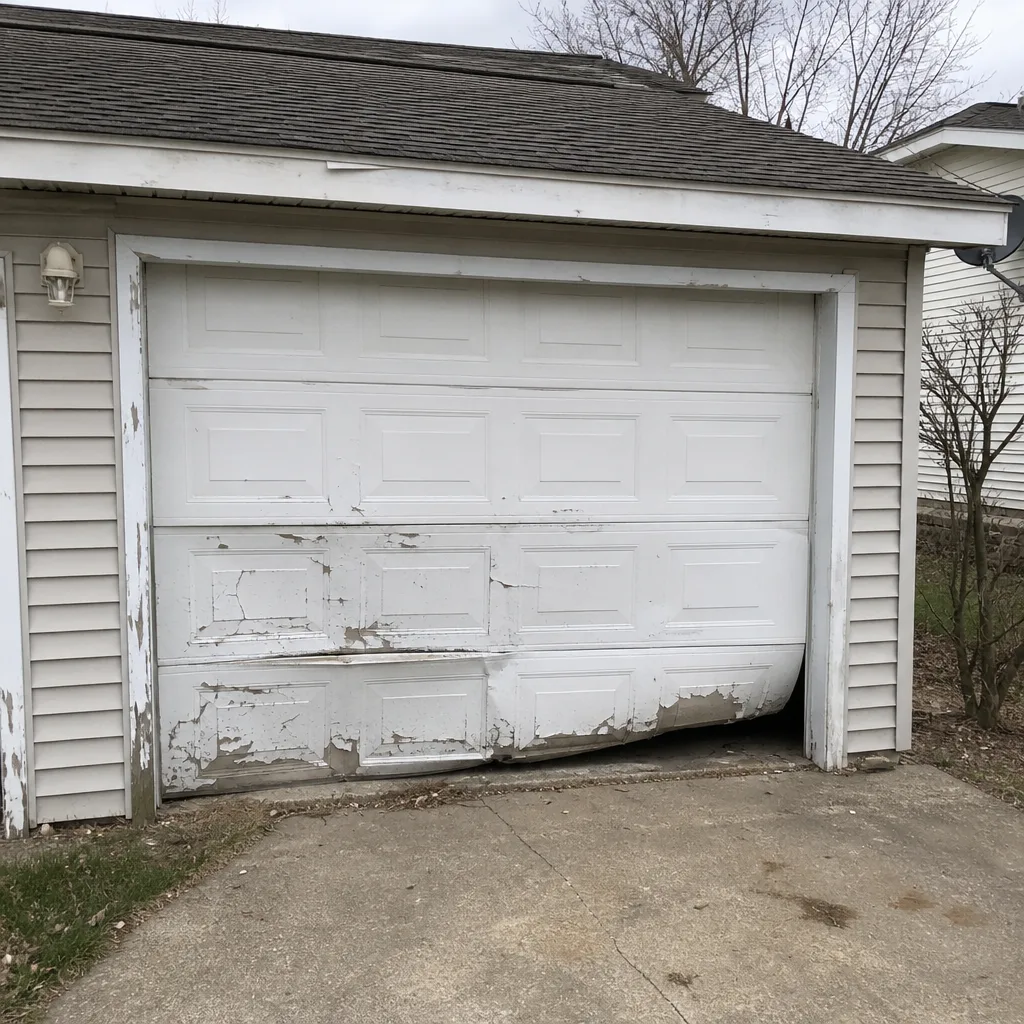 Before
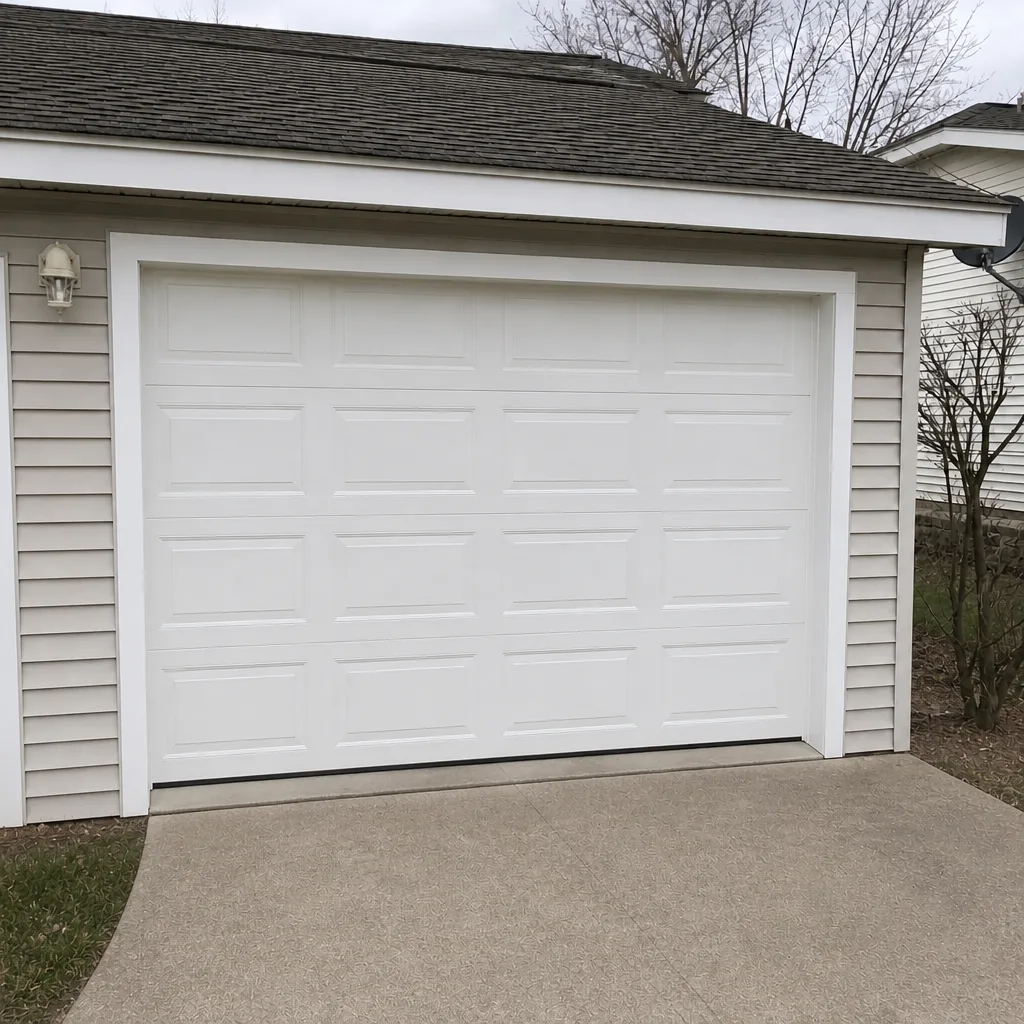 After
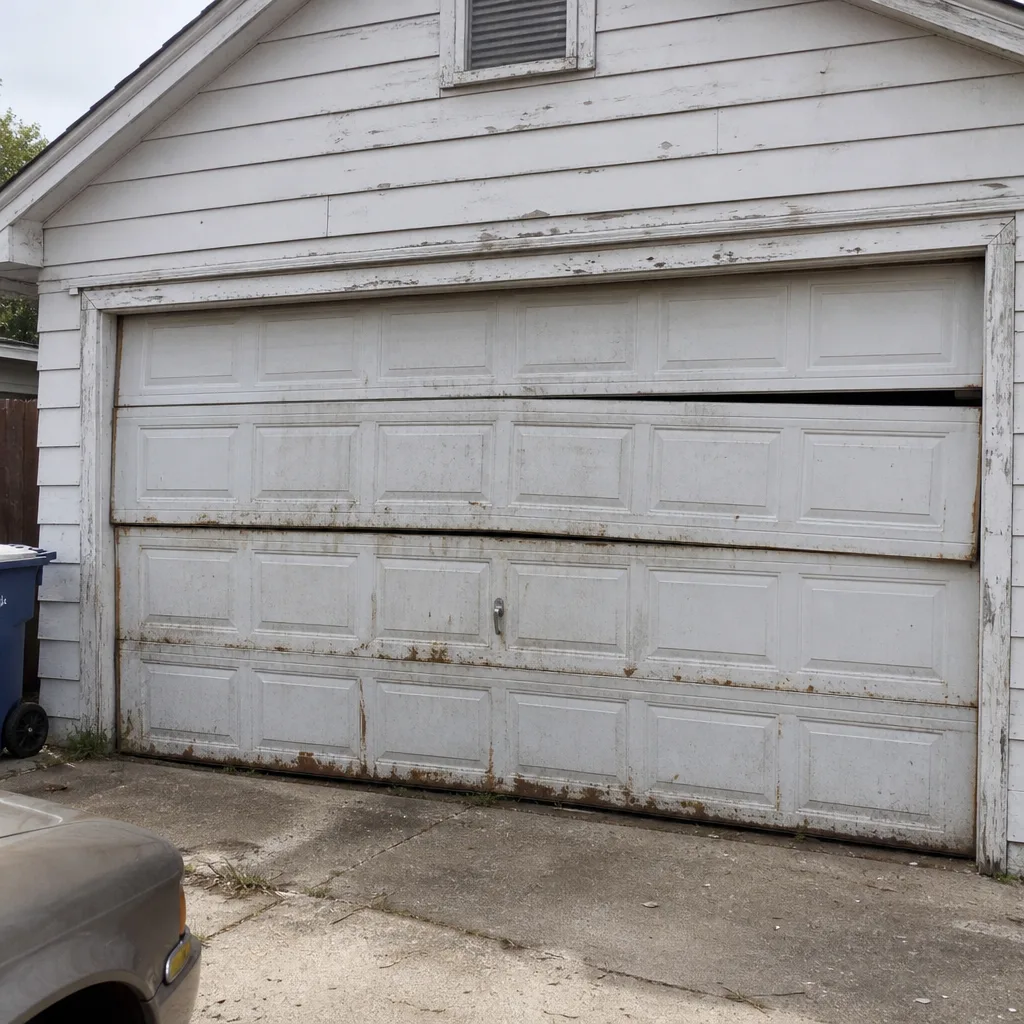 Before
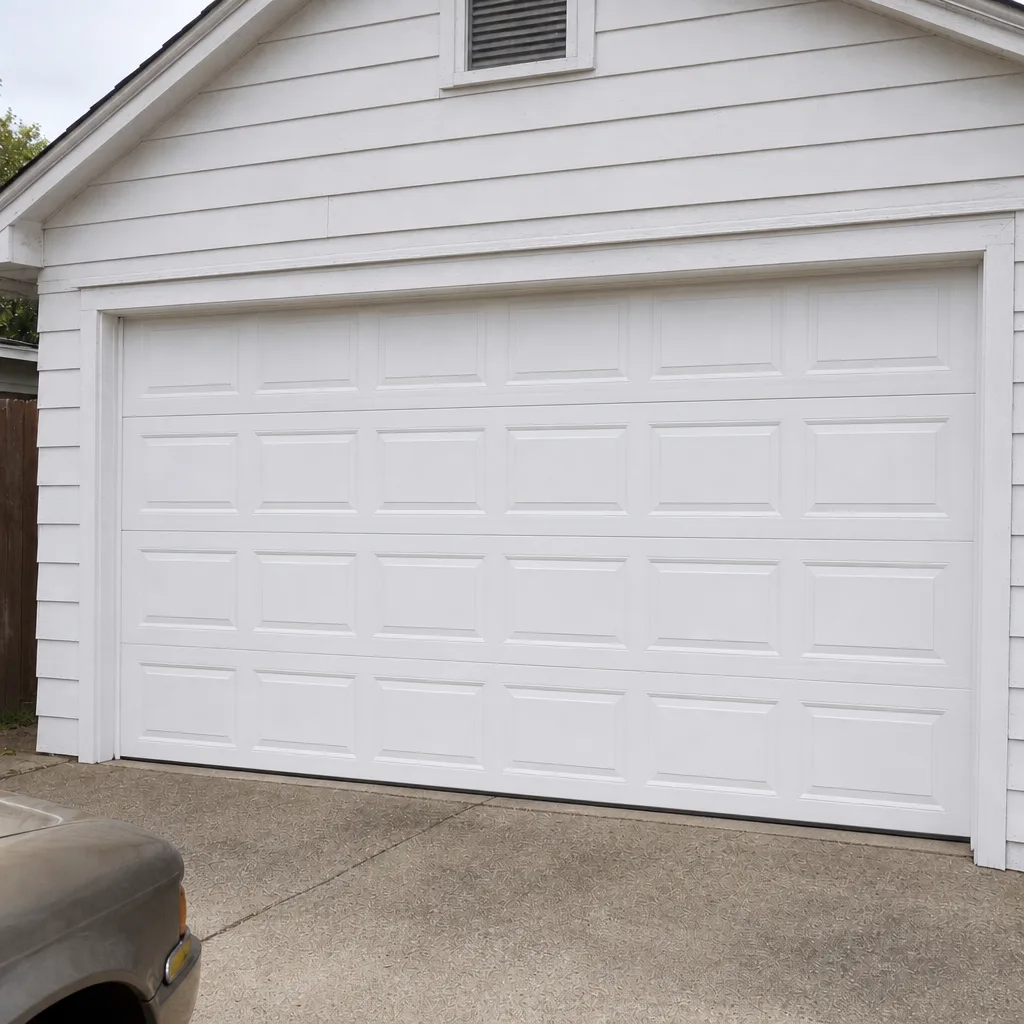 After
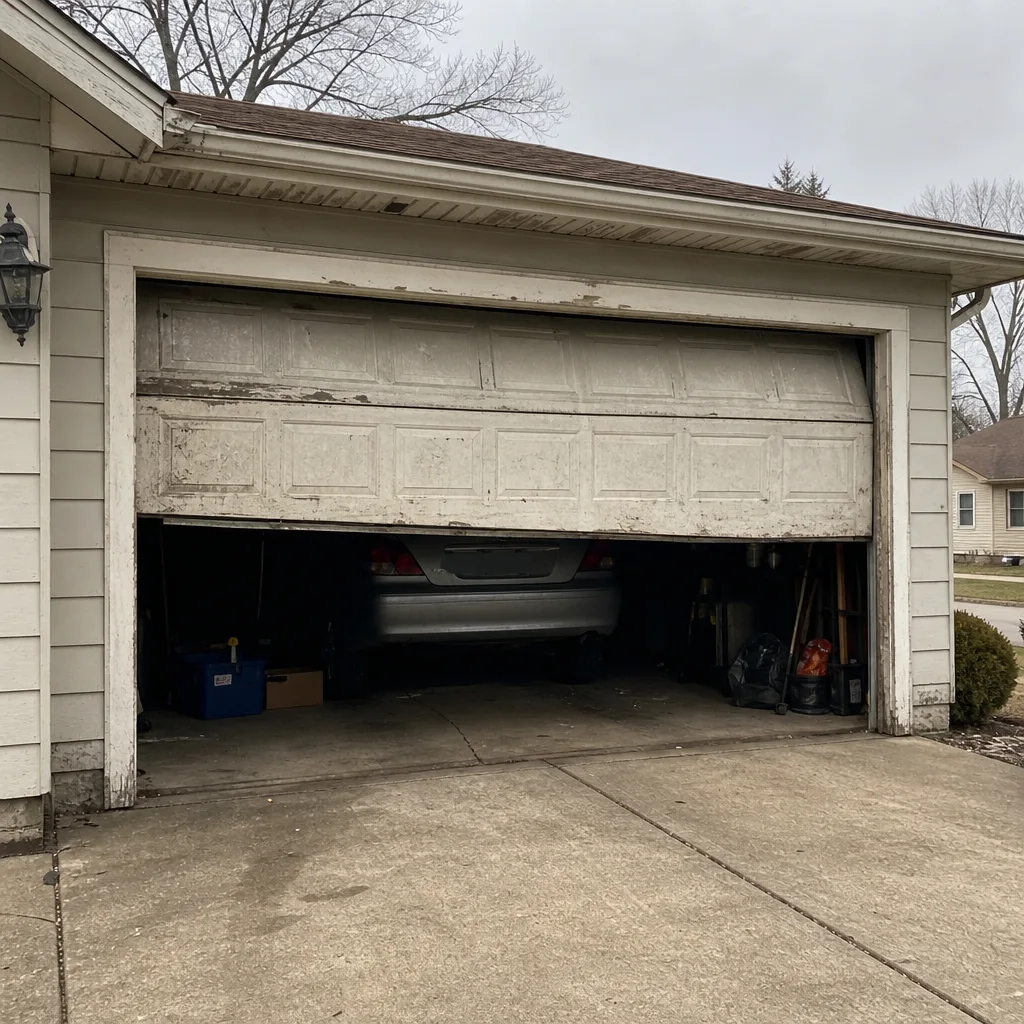 Before
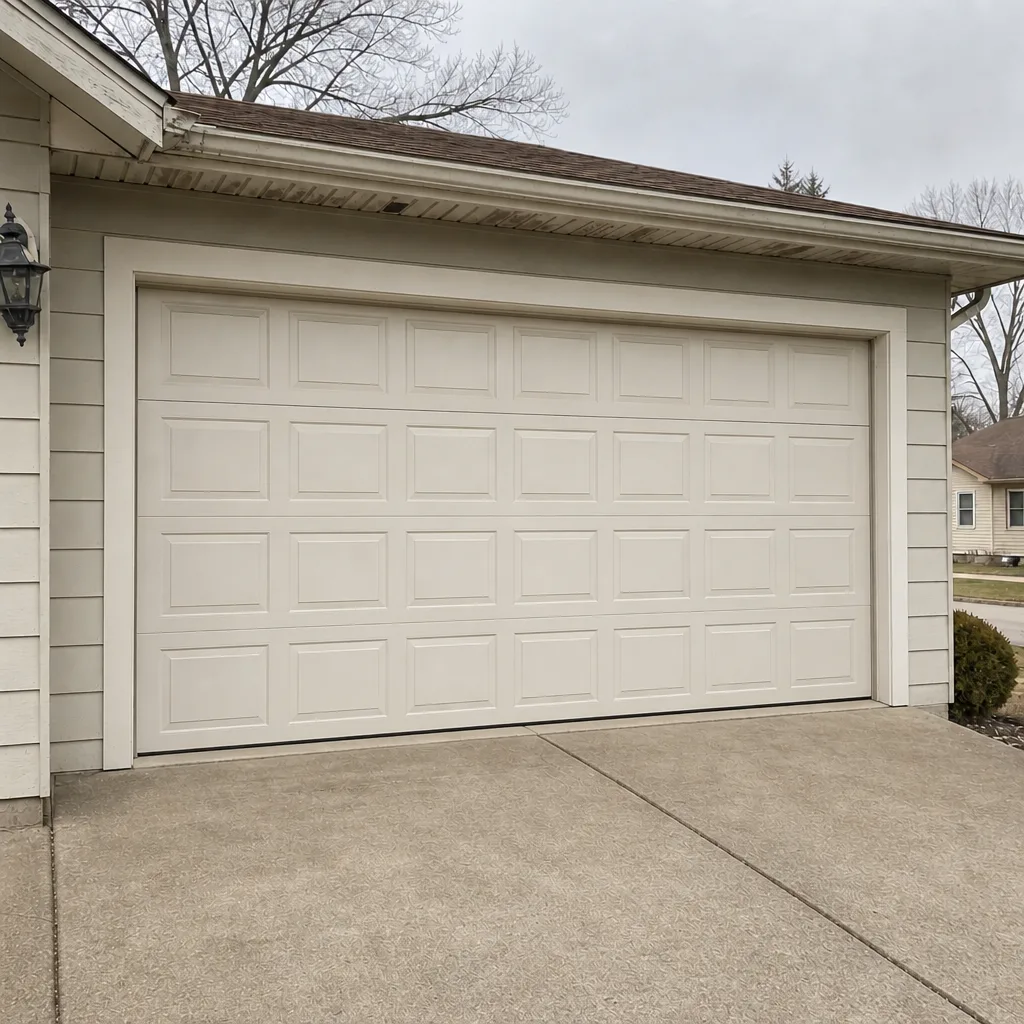 After
When to Call a Professional
Some of what’s on this list you can handle yourself, and some you should never touch. The safe self-service list is short: visual inspections, the 60-second asymmetry test, checking safety sensor LEDs, replacing a remote battery, tightening a loose bolt. The professional list is everything else. Broken springs, snapped cables, popped hinges, panels off track, doors off balance, openers tripping force limits, and smart openers that won’t respond through the wall switch or the app. Any of those, call. A garage door that’s working but making new noises is also worth a diagnostic, because a ten-minute inspection on a symptom is cheaper than a full repair on the same part a few months later. If you’re not sure, describe it and we’ll help you sort. Garage Door Repair Joliet Pros offers free estimates in Joliet, and our technicians have up to 12 years of experience. Call (833) 382-8894.
Frequently Asked Questions
The most serious signs are a visible gap or break in a torsion spring, a frayed or slack cable, a door hanging off its track, and any opener that keeps cycling a door that’s clearly off balance. Any of these means stop using the door immediately and call for service. They’re all conditions where a component under load is about to fail, and none of them are safe to investigate on your own.
Grinding usually means a roller bearing has seized and the roller is skidding on the shaft instead of rolling. Grinding that changes with each rotation is a roller or roller set; grinding that stays constant points to a binding track or worn hinge. Left alone, a seized roller drags the track out of alignment and adds to the spring’s load. Call (833) 382-8894 for a diagnostic, and estimates are free.
A door that only hesitates in cold weather has a mechanical problem the cold is exposing, not a random weather sensitivity. Cold tightens clearances, thickens lubricant, and reduces the elasticity margin of the spring, so a spring that’s near the end of its life fails on the coldest morning of the year. If you’ve noticed cold-weather lag on a Joliet door, get it diagnosed before winter takes the decision out of your hands. Call (833) 382-8894 for an exact quote, and estimates are free.
No. Torsion springs are under a load that can cause serious injury if released improperly, and the repair requires the correct tools and a trained technician to do it safely. Spring repair is one of the highest-risk jobs in the trade, which is why we handle it as a standard service rather than recommending it as a homeowner project. If you see a spring with a visible gap or break, do not run the door. Call (833) 382-8894 and we’ll book a technician for the earliest available slot.
A cosmetic dent is a localized depression with no creasing, no popped rivets, no seam separation, and no change to the bottom seal. Anything with crack lines, seam damage, or a bottom seal that no longer sits flush is structurally significant and should be repaired. Panels on most Clopay and Amarr doors can be replaced individually, which is often the cheaper fix. Call (833) 382-8894 for an assessment.
Yes. A failure of the safety reverse feature is a safety system failure, and the door should not be used until it’s checked. It usually traces to dirty or misaligned safety sensors, but it can also indicate a logic board or force-setting problem that a technician should see. Call (833) 382-8894 – for anything involving safety reversal, we treat the call as urgent.
We service equipment from eight major brands: LiftMaster, Chamberlain, Genie, Clopay, Amarr, Wayne Dalton, Craftsman, and Raynor. That means we can diagnose and repair the system you already have, opener or door, rather than pushing a replacement you don’t need. Call (833) 382-8894 for a free estimate.
No. The written quote you agree to before any work begins is the price. If an inspection turns up something we didn’t catch on the phone, we’ll tell you what we found and quote the additional work separately before touching it, so you always have a chance to approve before anyone turns a wrench. Call (833) 382-8894 for your free estimate.
The Bottom Line
Most garage door failures give you plenty of notice, and the difference between a cheap repair and an expensive one is often just whether the homeowner read the signs. Treat grinding, popping, and slamming as real information, not background noise. Run the asymmetry test once a season and take two minutes to look at the cables and springs. Watch the cold-weather behavior, because Joliet’s winters make a weakening system visible earlier than milder climates do. And don’t touch the springs or cables yourself, no matter how confident you are. If something on this guide’s stop-use list shows up, stop using the door and call. When the door’s the problem, it’s the only problem worth solving today.
Get a Free Estimate in Joliet
If any of the warning signs in this guide match what your door is doing, we’ll take a look. Garage Door Repair Joliet Pros handles repair, opener repair, spring repair, full installation, and emergency service, and our technicians have up to 12 years of experience on the brands you already own. Call (833) 382-8894 for a free estimate, and we’ll tell you straight whether it’s a quick fix or something that needs a full replacement. Same-day service is available for urgent repair calls, and the price you’re quoted is the price you pay before any work starts.
Written by the team at Garage Door Repair Joliet Pros.